
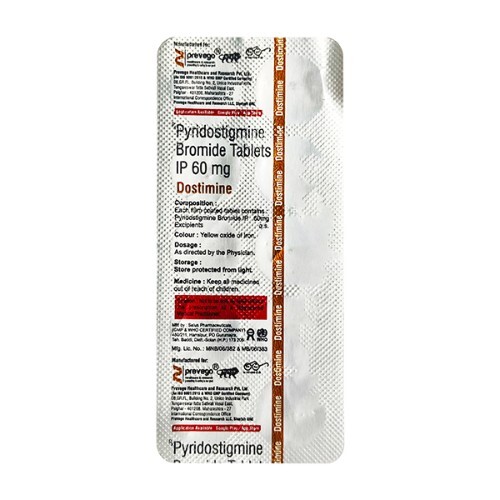
DOSTIMINE TABLET
DOSTIMINE TABLET

Dostimine Tablet

In Stock

₹180.93₹89.88(51% OFF)
Image Prescription Required
    
PACK SIZE10
CATEGORYGeneric
SALT COMPOSITIONPYRIDOSTIGMINE 60 MG
MANUFACTUREPREVEGO HEALTHCARE
DOSAGE FORMTABLET
ImageFree Shipping
ImageDelivery within 1 or 2 days
  • Description
  • Rating & Review

Uses:

  • Myasthenia Gravis: Primarily used to treat muscle weakness in myasthenia gravis, an autoimmune condition affecting neuromuscular junctions. It helps improve muscle strength but does not cure the condition.
  • Paralytic Ileus: Treats intestinal atony (constipation due to muscle inactivity).
  • Post-Operative Urinary Retention: Assists with difficulty in passing urine after surgery.
  • Reversal of Non-Depolarizing Muscle Relaxants: Used intravenously to reverse the effects of non-depolarizing neuromuscular blockers post-surgery.
  • Other Uses: May be used in military settings as a prophylactic against nerve gas exposure or for conditions like postural orthostatic tachycardia syndrome (POTS) to improve orthostatic symptoms.

Dosage:

  • Myasthenia Gravis:
    • Adults: Typically 600 mg/day (10 tablets of 60 mg), spaced to provide maximum relief. Mild cases may require 60–360 mg/day (1–6 tablets), while severe cases may need up to 1,500 mg/day (25 tablets). Doses are adjusted based on individual response.
    • Children: Initial dose for under 6 years is 30 mg (½ tablet); for 6–12 years, 60 mg (1 tablet). Dosage is increased gradually (15–30 mg daily) until optimal effect, usually 30–360 mg/day.
  • Paralytic Ileus/Post-Operative Urinary Retention:
    • Adults: 60–240 mg/day (1–4 tablets).
    • Children: 15–60 mg/day (¼–1 tablet).
  • Doses are typically taken with water, 30–60 minutes before meals or when muscle strength is needed most. Tablets can be broken for easier swallowing.

Administration:

  • Take with food or milk to reduce stomach upset.
  • Swallow whole; do not crush or chew if using extended-release formulations.
  • Dosage timing is critical for myasthenia gravis, often requiring a daily record of dose timing and effects to optimize treatment.

Contraindications:

  • Mechanical intestinal or urinary obstruction.
  • Known hypersensitivity to pyridostigmine, bromides, or any tablet ingredients.
  • Use with caution in patients with bronchial asthma, COPD, arrhythmias, bradycardia, vagotonia, kidney disease, or Parkinson’s disease.

Side Effects:

  • Common (Muscarinic): Nausea, vomiting, diarrhea, abdominal cramps, increased salivation, increased bronchial secretions, sweating, miosis (pupil constriction).
  • Nicotinic: Muscle cramps, twitching, weakness.
  • Other: Blurred vision, dizziness, headaches, urinary urgency, skin rash (due to bromide content).
  • Serious: Cholinergic crisis (overdose) with worsening muscle weakness, breathing difficulties, or paralysis. Seek immediate medical help if suspected.

Precautions:

  • Cholinergic Crisis vs. Myasthenic Crisis: Overdosage can lead to cholinergic crisis (severe muscle weakness, respiratory failure), which mimics myasthenic crisis (disease worsening). Differentiation may require a Tensilon (edrophonium) test and clinical judgment. Cholinergic crisis requires stopping the drug and administering atropine; myasthenic crisis may need increased doses.
  • Pregnancy/Breastfeeding: Use only if benefits outweigh risks. Pyridostigmine crosses the placenta and may pass into breast milk in small amounts. Monitor newborns for effects.
  • Driving/Operating Machinery: May cause drowsiness or blurred vision; avoid activities requiring alertness until effects are known.
  • Kidney Impairment: Lower doses may be needed as pyridostigmine is excreted unchanged by the kidneys.

Interactions:

  • Drugs: May interact with atropine, belladonna, clidinium, dicyclomine, glycopyrrolate, hyoscyamine, aminoglycosides, antiarrhythmics, or corticosteroids. Methylcellulose can inhibit absorption.
  • Alcohol: May increase drowsiness; avoid consumption.
  • Inform your doctor of all medications, supplements, or herbal products.

Storage:

  • Store at room temperature (15–30°C or 59–86°F) in a dry place, preferably with silica gel due to hygroscopic nature. Keep out of reach of children.

Alternate Brands of

For informational purposes only. Consult a doctor before taking any medicines.

Get Chemist180

Download the Chemist180 app for easy and quicker order!