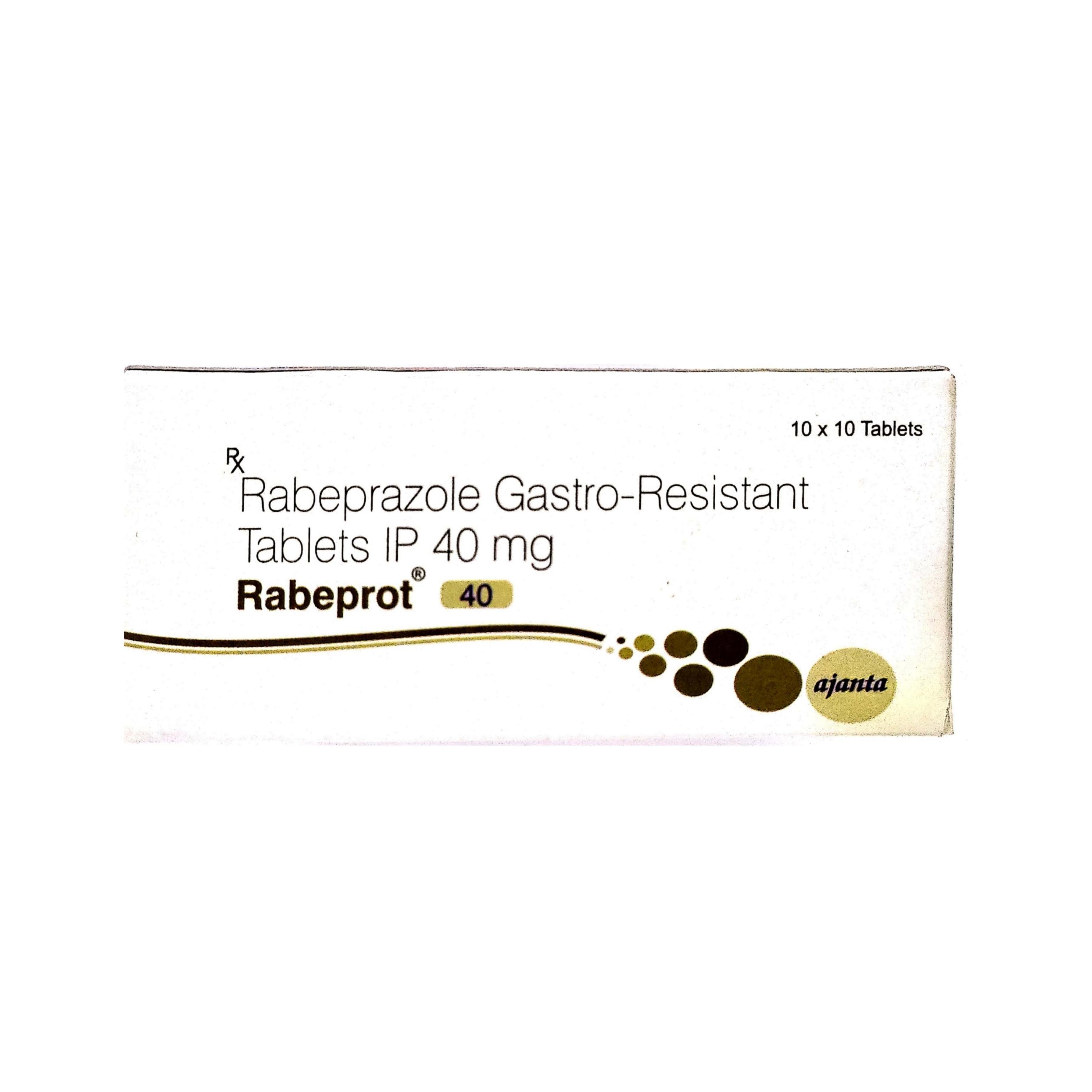
Rabeprot 40 mg Tablet is a medication containing Rabeprazole Sodium (40 mg), a proton pump inhibitor (PPI) used to reduce stomach acid production. It is prescribed for treating acid-related conditions of the stomach and intestine, such as:
- Gastroesophageal Reflux Disease (GERD): Manages heartburn and acid reflux by reducing acid flow into the esophagus.
- Peptic Ulcer Disease: Promotes healing of stomach and duodenal ulcers and prevents their recurrence.
- Zollinger-Ellison Syndrome: Controls excessive acid production caused by pancreatic or intestinal tumors.
- Helicobacter pylori Eradication: Used with antibiotics (e.g., amoxicillin, clarithromycin) to treat ulcers caused by H. pylori infection.
How It Works
Rabeprot inhibits the H+/K+-ATPase enzyme (proton pump) in the stomach’s parietal cells, reducing acid secretion. This helps alleviate symptoms like heartburn, difficulty swallowing, and acid-related damage to the esophagus or stomach, while promoting ulcer healing.
Dosage and Administration
- Typical Dose: One 40 mg tablet daily, preferably 30 minutes before a meal, usually in the morning.
- Administration: Swallow the tablet whole with water; do not crush, chew, or split it, as it is enteric-coated to protect it from stomach acid.
- Duration: Varies by condition (e.g., 4–8 weeks for GERD, 7 days for H. pylori eradication). Long-term use may be required for conditions like Zollinger-Ellison syndrome.
Side Effects
Common side effects include:
- Headache
- Dizziness
- Nausea, vomiting
- Diarrhea or constipation
- Abdominal pain
- Flatulence
Serious side effects (rare) may include:
- Severe allergic reactions (rash, itching, swelling)
- Acute tubulointerstitial nephritis (kidney issues)
- Low magnesium or vitamin B12 levels (with long-term use)
- Increased risk of bone fractures or Clostridium difficile-associated diarrhea
Precautions
- Allergies: Avoid if allergic to rabeprazole or other PPIs (e.g., omeprazole, esomeprazole).
- Pregnancy/Breastfeeding: Not recommended unless benefits outweigh risks; consult a doctor.
- Drug Interactions: Avoid with HIV medications (e.g., rilpivirine, atazanavir), methotrexate, or warfarin. Inform your doctor about all medications.
- Long-term Use: May increase risks of nutrient deficiencies, bone fractures, or infections. Regular monitoring is advised.
- Lifestyle: Avoid alcohol, spicy/fatty foods, and late-night meals to enhance effectiveness.
Storage
Store below 25°C, protected from moisture, sunlight, and heat.


 Prescription Required
 Free Shipping
 Delivery within 1 or 2 days