

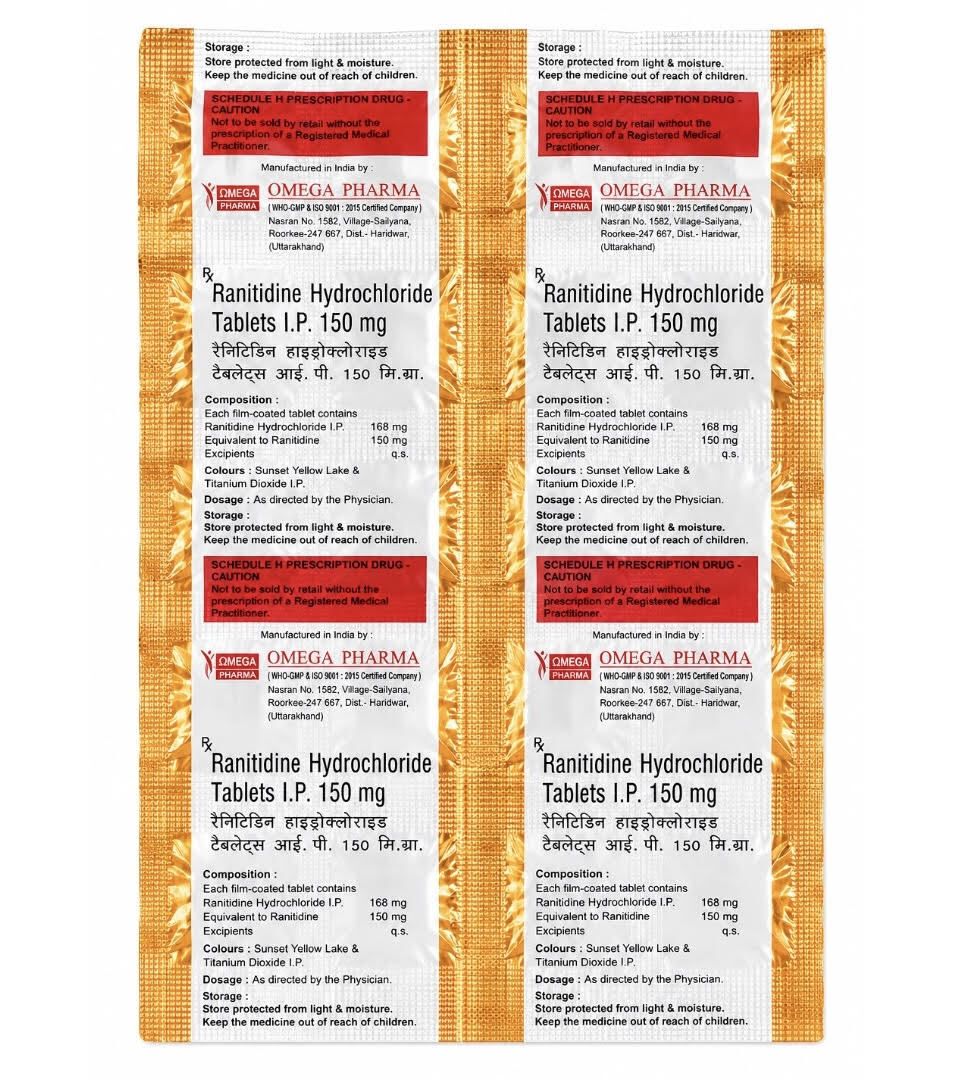
Ranitidine 150mg Tablet
In Stock
₹40.00(72% OFF)
 Prescription Required
 Non Returnable
PACK SIZE10
CATEGORYGeneric
SALT COMPOSITION
MANUFACTUREOMEGA PHARMACEUTICALS
DOSAGE FORMTABLET
 Free Shipping
 Delivery within 1 or 2 days
In Stock
Prescription Required Non ReturnableFree ShippingDelivery within 1 or 2 daysRanitidine 150 mg Tablet is an H2 receptor blocker that was used to reduce the amount of acid produced by the stomach. It was commonly prescribed for the treatment and prevention of acid reflux (GERD), heartburn, stomach ulcers, duodenal ulcers, and conditions associated with excessive stomach acid production, such as Zollinger-Ellison syndrome. By lowering stomach acid, it helped relieve symptoms like burning chest pain, acid regurgitation, indigestion, and stomach discomfort while allowing ulcers to heal. However, due to concerns regarding NDMA contamination, Ranitidine products have been withdrawn from many markets. Patients requiring treatment for acid-related disorders are generally prescribed safer alternatives. Lifestyle measures such as avoiding spicy foods, eating smaller meals, maintaining a healthy weight, limiting alcohol, quitting smoking, and avoiding lying down immediately after meals remain important for controlling acid reflux symptoms.
Ranitidine 150 mg is an H2 receptor antagonist that reduces stomach acid production by blocking histamine H2 receptors on gastric parietal cells. Lower acid levels help relieve symptoms of heartburn, acid reflux, gastritis, and peptic ulcers, while promoting healing of damaged stomach and intestinal lining. It was widely used for treating gastroesophageal reflux disease (GERD), gastric ulcers, duodenal ulcers, and conditions associated with excessive acid secretion. By reducing acidity, it also helped prevent ulcer recurrence and improve digestive comfort. However, the discovery of NDMA contamination in Ranitidine products led to its withdrawal or restriction in many countries because of potential long-term safety concerns.
Today, healthcare providers generally recommend safer alternatives such as Famotidine or proton pump inhibitors for most acid-related conditions. Patients experiencing persistent acidity should seek medical evaluation rather than self-medicating. Lifestyle measures including dietary modification, weight management, avoiding smoking and alcohol, and eating smaller meals remain essential components of long-term acid reflux management.
AIt was used to treat acid reflux, heartburn, stomach ulcers, duodenal ulcers, and other acid-related stomach disorders.
AMany Ranitidine products were withdrawn because of concerns about NDMA contamination, which may increase health risks with prolonged exposure.
ADoctors commonly prescribe Famotidine or proton pump inhibitors such as Pantoprazole or Omeprazole, depending on the condition.
ANo. Do not use old or stored Ranitidine tablets without consulting your healthcare provider.
AYes. Eating smaller meals, avoiding spicy foods, limiting alcohol, quitting smoking, maintaining a healthy weight, and avoiding lying down immediately after eating can significantly improve symptoms.
ASeek urgent medical care if you experience vomiting blood, black stools, severe chest pain, difficulty swallowing, persistent abdominal pain, or severe allergic reactions.
For informational purposes only. Consult a doctor before taking any medicines.