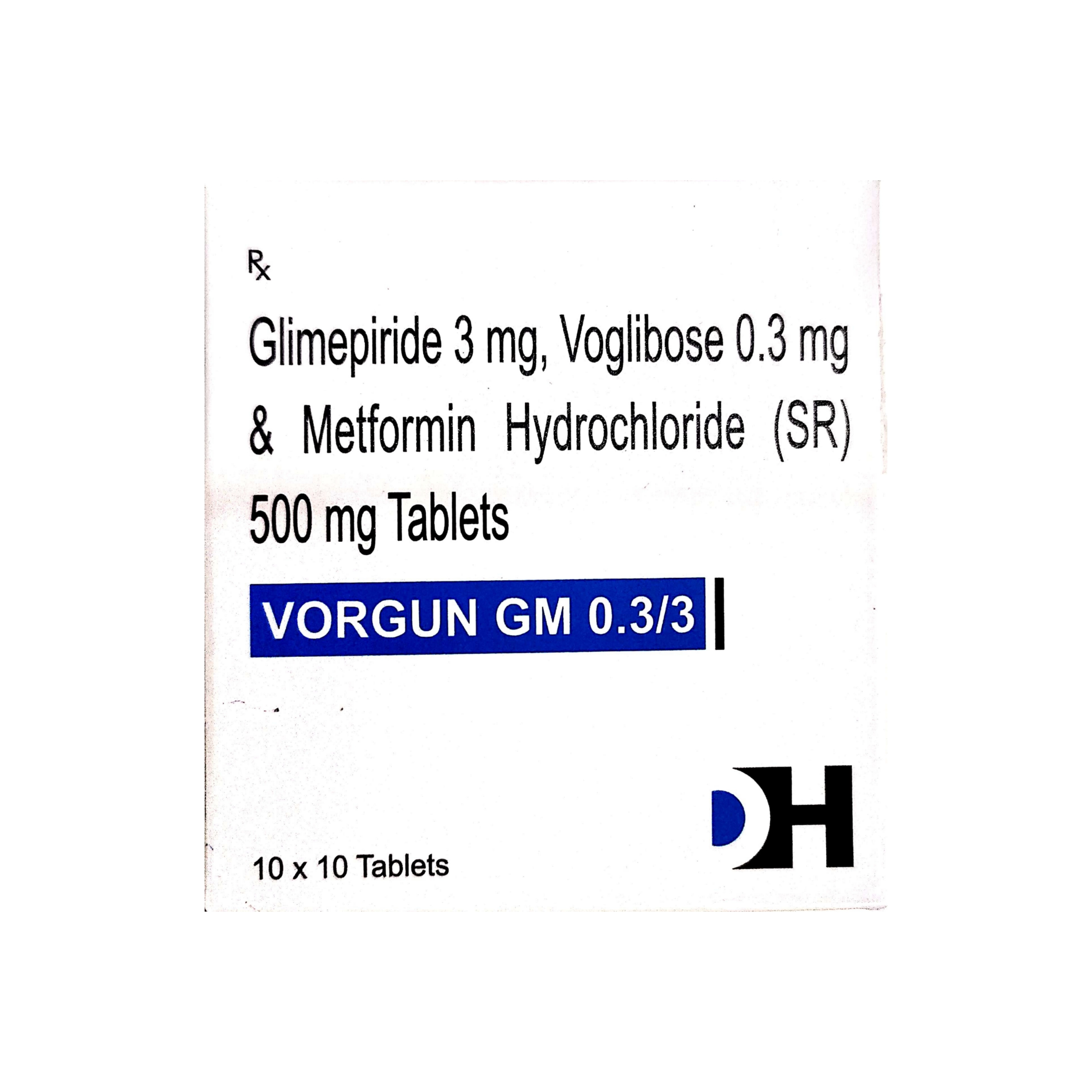
Vorgun GM 0.3/3MG Tablet is a combination anti-diabetic medication used to manage type 2 diabetes mellitus in adults when diet, exercise, and single or dual-drug therapy are insufficient to control blood sugar levels. It contains three active ingredients: Glimepiride (3 mg), Voglibose (0.3 mg), and Metformin (500 mg) in a sustained-release (SR) formulation. This triple combination helps regulate blood glucose levels effectively through complementary mechanisms.
Composition
- Glimepiride (3 mg): A sulfonylurea that stimulates the pancreas to release insulin, lowering blood glucose by increasing insulin secretion.
- Voglibose (0.3 mg): An alpha-glucosidase inhibitor that slows carbohydrate breakdown in the intestines, reducing postprandial (after-meal) blood sugar spikes.
- Metformin (500 mg SR): A biguanide that decreases liver glucose production, improves insulin sensitivity, and reduces intestinal glucose absorption.
Uses
- Primarily indicated for type 2 diabetes mellitus to control high blood glucose levels.
- Helps prevent diabetes-related complications such as kidney damage (nephropathy), nerve damage (neuropathy), eye damage (retinopathy), and cardiovascular issues when used with a healthy diet and regular exercise.
Mechanism of Action
- Glimepiride: Enhances insulin release from pancreatic beta cells by closing potassium channels, leading to cell depolarization and insulin secretion.
- Voglibose: Inhibits intestinal alpha-glucosidase enzymes, delaying the conversion of complex carbohydrates into simple sugars like glucose, thus blunting post-meal glucose surges.
- Metformin: Reduces hepatic glucose production, enhances insulin sensitivity in peripheral tissues, and slows glucose absorption from the gut.
Administration
- Dosage: As prescribed by a healthcare provider, typically taken with food to minimize gastrointestinal side effects. The sustained-release formulation ensures gradual metformin release for better tolerability.
- Instructions: Swallow the tablet whole with water; do not crush or chew. Take consistently at the same time daily for optimal results.
- Regular blood sugar monitoring is essential, and dosage may be adjusted based on blood glucose levels.
Side Effects
Common:
- Hypoglycemia (low blood sugar, symptoms: sweating, dizziness, shakiness)
- Nausea, diarrhea, abdominal pain
- Altered taste, flatulence
- Headache, upper respiratory tract infection
Serious (seek medical attention):
- Lactic acidosis (rare, symptoms: fatigue, muscle pain, breathing difficulty)
- Allergic reactions (rash, itching, swelling)
- Liver dysfunction (jaundice, dark urine)
Precautions
- Contraindications:
- Type 1 diabetes, diabetic ketoacidosis, or severe kidney/liver disease.
- Known allergy to any component.
- Conditions like inflammatory bowel disease or metabolic acidosis.
- Alcohol: Avoid, as it increases the risk of hypoglycemia and lactic acidosis.
- Pregnancy/Breastfeeding: Not recommended unless deemed necessary by a doctor.
- Drug Interactions: Caution with medications like beta-blockers, diuretics, or steroids, which may enhance or diminish hypoglycemic effects. Consult a doctor before combining with other drugs.
- Hypoglycemia Risk: Higher when meals are skipped, with excessive exercise, or when combined with other antidiabetic drugs. Always carry a quick sugar source (e.g., glucose tablets, fruit juice).
Storage
- Store in a cool, dry place, away from direct sunlight, as per the packaging instructions.
- Keep out of reach of children.


 Prescription Required
 Free Shipping
 Delivery within 1 or 2 days